
Immigration
Armenia Visa Consulting for Foreign Employers
Visa entry and work authorization are two separate things, and conflating them is the most common compliance mistake we see at clients before engagement. This page covers the visa side of the regime — visa-free entry, e-visa processing, transit visas, and overstay prevention — and clarifies where the visa workflow ends and the work permit workflow begins.
Visa-free entry for major source markets
Citizens of the United States, EU member states, the United Kingdom, and many other countries can enter Armenia visa-free for up to 180 days per year. This generous entry window is a structural feature of the Armenian regime that materially simplifies the start of any deployment: the employee arrives without a pre-arrival visa, can begin the in-country work permit application immediately, and can stay legally for the duration of standard 30-business-day processing.
Visa-free entry is not unlimited. The 180-day annual cap applies. Employees who arrive on a visa-free basis and stay beyond the cap without converting to a Temporary Residence Card are accumulating overstay exposure that compounds quickly. The clean handoff is for the work permit application to be filed early in the visa-free window and the Temporary Residence Card to be issued before the cap is reached.
E-visa for other nationalities
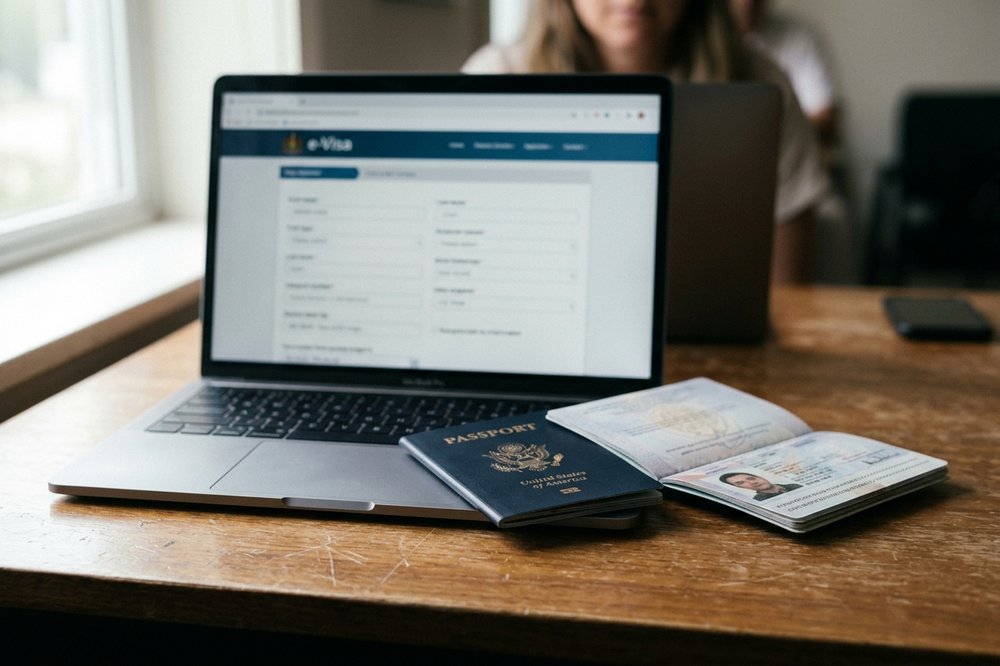
For nationalities that do require a visa for Armenia, the e-visa system handles applications electronically. Processing takes approximately 3 business days. There is no consulate appearance — the entire workflow is online. The e-visa supports both business and tourist entry; the e-visa itself does not authorize work, the same as visa-free entry.
We handle the e-visa workflow for clients deploying staff from nationalities that require it. For ad-hoc business travel — counterparty meetings, government interactions, due-diligence visits — the e-visa is typically the right pathway. For a deployment that turns into employment, the e-visa is the entry mechanism and the work permit is the subsequent authorization.
The critical distinction: entry vs. work authorization
Visa-free entry and e-visa entry both permit physical presence in Armenia. Neither authorizes employment. Working — including remote work performed from Armenian territory on behalf of a foreign employer, without an exempt category — requires a Temporary Residence Card or a documented exemption.
This is not an academic distinction. The penalty schedule is real:
- a meaningful penalty employer fines for missing work permits
- a substantial per-worker penaltystarting per-worker penalty for informal employment as of 2026
- meaningful overstay fines for employees
For clients who plan to deploy more than a single executive on a short engagement, the cleanest position from day one is to confirm whether the role is exempt — see the Work Permit Exemptions page — and, if it is not exempt, file the application early enough that the Temporary Residence Card is in hand before substantive work begins.
Transit visas
Transit visas apply for nationalities that need a visa for Armenia and are passing through en route to a third country. Most professional travel does not require a transit visa — the e-visa or visa-free pathway handles entry and exit cleanly. For specific itineraries where transit applies, we coordinate the documentation alongside the broader travel arrangement.
Overstay prevention
Overstay is the most common preventable compliance event in early-stage Armenian deployments. The standard pattern is an employee who arrives visa-free, begins work informally while the work permit is pending or — worse — never filed, and accumulates day-on-day exposure to both overstay fines and shadow employment penalties.
We prevent this in three ways. First, the exemption analysis runs before arrival so the legal basis for the deployment is documented from day one. Second, where the work permit is required, the application is filed within the first week of the visa-free window so the Temporary Residence Card is issued well before the cap. Third, where the timeline tightens unexpectedly — apostille delays, document gaps, an unanticipated labor market test extension — we adjust the application schedule and, where necessary, arrange a short exit-and-return to reset the visa-free counter before the cap is breached.
For clients running multiple simultaneous deployments — particularly US TRIPP-related companies and European companies deploying regional staff — the overstay risk scales with headcount. The standard scope on a multi-employee deployment includes individual overstay tracking on a per-employee basis.
How the visa work integrates with the broader scope
The visa workflow is one component of an integrated immigration engagement. The Immigration and Work Authorization hub is the parent page. The work permit process and the Temporary Residence Card cover the substantive authorization that takes over once the visa entry phase is complete. The Soft-Landing Programs page covers the surrounding arrival and settlement work that runs in parallel.
Related questions
Do US citizens need a visa to enter Armenia?
No. US citizens can enter Armenia visa-free for up to 180 days per calendar year for tourism, business meetings, or short visits. For longer stays or any employment relationship with an Armenian entity, a Temporary Residence Card sponsored by the employer is required. We handle the residence card workflow as part of the immigration and work authorization scope.
How long can Americans stay in Armenia visa-free?
US citizens can stay in Armenia visa-free for up to 180 days per calendar year. The 180 days can be a single continuous stay or multiple shorter visits within the calendar year. Once the 180-day limit is reached, a residence card or visa-extension process is required to remain legally in country.
How do I apply for an Armenian visa online?
For nationalities that do require a visa, the e-visa system handles applications electronically with processing in approximately 3 business days. The e-visa is suitable for tourism and short business visits; it is not a work-authorization document. For employment-related entry, the work permit and Temporary Residence Card workflow runs through workpermit.am and the Joint Office of Public Services.
Which countries can visit Armenia without a visa?
US citizens, EU citizens, UK citizens, Canadian citizens, Australian citizens, Japanese citizens, South Korean citizens, and citizens of most OECD economies can enter Armenia visa-free for varying periods (typically 180 days per calendar year). EAEU citizens have unrestricted entry under treaty. The visa-free list is published by the Armenian Ministry of Foreign Affairs and updated periodically.
What is the difference between a visa and a Temporary Residence Card?
A visa authorizes entry and short-term stay; a Temporary Residence Card authorizes longer-term residence tied to a specific purpose (employment, family, study, investment). For corporate deployments, the Temporary Residence Card is the document that legally enables an employee to live and work in Armenia for the deployment duration. We sponsor and process the residence card alongside the work permit as part of the standard engagement.
Are there new visa rules for Armenia in 2026?
The 2026 changes affecting most foreign employees are the mandatory Social Number for company registration and the unified electronic employment contract platform, both of which are upstream of the visa workflow rather than visa-system changes themselves. The underlying e-visa and visa-free regimes are stable. For employment-related residence, the workpermit.am and migration.e-gov.am workflows continue to be the operative platforms.

Frequently asked questions
How long can a US or EU citizen stay in Armenia visa-free?
Up to 180 days per calendar year. The visa-free window covers entry and the in-country work permit application process, which means the employee can arrive without a pre-arrival visa and begin paperwork on the ground.
What's the e-visa processing time?
Approximately 3 business days for nationalities that require a visa for entry. The e-visa system is electronic end-to-end with no consulate appearance.
Does visa-free entry authorize work?
No. Visa-free entry is a residence permission, not a work authorization. Working — including remote work performed from Armenian territory on behalf of a foreign employer — requires either a Temporary Residence Card or a documented exemption category. This is the single most common compliance mistake we see at clients before engagement.
What are the overstay penalties?
The penalty applies in addition to any work permit fines (a meaningful penalty) and shadow employment penalties (starting a substantial per-worker penalty as of 2026). Overstay events also affect future entry eligibility and can complicate subsequent work permit applications.
When does a transit visa apply?
Transit visas apply for nationalities that need a visa for Armenia and are passing through en route to a third country. We coordinate transit visas when an itinerary requires it. For most professional travel, the e-visa or visa-free pathway is the right answer.
Ready to deploy your team to Armenia?
Every engagement starts with a free consultation. We assess your workforce, timeline, and entity structure, then deliver a tailored proposal with transparent pricing and clear milestones.
Schedule a Free Consultation